Tag: Latest posts
-
The Solo Woman Researcher in the Field
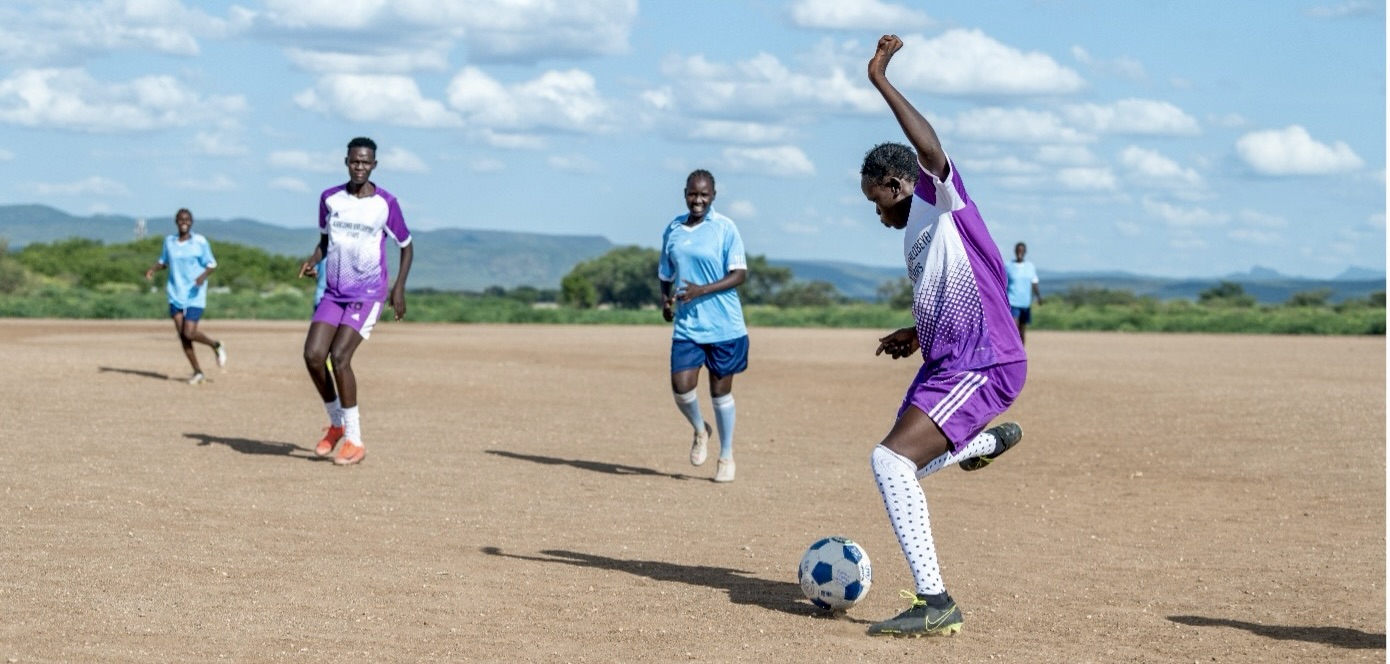
In this post, Sudha Rawat and Rose Jaji reflect on their experiences during field research with refugees in India and Kenya. They highlight how the research encounter is subject to constant negotiation beyond the initial rapport and entails unanticipated realities that are more about adaptation and personalized encounters than training and disembodied neutral observation.
-
Mapping Migration
This post introduces the Atlas of African Migration, developed by the Scalabrini Institute for Human Mobility in Africa (SIHMA), which combines infographics with country profiles and migration narratives. The research outlines migration drivers, tracks movement corridors and identifies correlations between economic conditions and migration flows.
-
Welcoming the Newcomers Our Way

Mainstream perceptions in public, media, and policy discourses predominantly assign the responsibility of integrating internally displaced persons to local and national institutions. In this post, Joyce Takaindisa reflects on recent fieldwork conducted in Chimanimani, Zimbabwe where Cyclone Idai displaced thousands and left a trail of destruction in 2019. She highlights the unique traditional practices that transcend conventional…
-
The Ruins of Kafala Bending
Kafala is a sponsorship system that governs the employment of migrant workers in the Gulf States, particularly in sectors such as construction, domestic work, and hospitality. Under the kafala system, domestic workers are tied to their employers (kafils), often resulting in vulnerable and oppressive conditions. Some domestic workers opt for escaping the system, often under…
-
Africa Is Our Country

In this post, Yacine Ait-Larbi makes a case for the need to consider free movement within the African continent as a key asset for Algeria’s ambitions to reform its economy. The author argues that Preferential Trade Agreements (PTAs), such as the African Continental Free Trade Agreement (AfCFTA), offer Algeria a unique opportunity to revitalise migration…
-
The EU Africa migration agenda

In this post, Claire Kumar from the Overseas Development Institute (ODI) reflects on a high-level policy seminar which aimed to explore challenges and concerns around migration governance and gather recommendations for charting a new path for future.
-
Displacement agriculture: neither seen nor heard

Cover photo by author. Burundian labour migrants outside Nyarugusu refugee camp. Series Introduction This post is a part of a series introducing the recent anthology Invisibility in African Displacements (Zed Books 2020). The book was edited by Simon Turner and AMMODI co-founder Jesper Bjarnesen, and offers new analytical ideas for understanding migrant in/visibilisation. In each…
-
Introducing “Invisibility in African Displacements”

Series Introduction This post is a part of a series introducing the recent anthology Invisibility in African Displacements (Zed Books 2020). The book was edited by Simon Turner and AMMODI co-founder Jesper Bjarnesen, and offers new analytical ideas for understanding migrant in/visibilisation. In each post, the contributors present their chapter in a more accessible format,…
-
Border management and state sovereignty in the Sahel

Since 2015, European interventions in the Sahel have surged in response to ‘irregular’ migration to the EU and the perceived incapacity of the Sahelian states to control their own borders. In this blog post, Ekaterina Golovko scrutinises the notion of capacity building in relation to local surveillance committees in order to deconstruct the underlying logics…
-
Involuntary returns from Libya and reintegration in Ghana

Involuntary returns of sub-Saharan African nationals are likely to become an increasingly central feature of international migration governance. Relying on findings from their empirical study on the experiences of Ghanaian migrants forcibly returned during the political crisis in Libya in 2011, Leander Kandilige and Geraldine Asiwome Adiku consider the challenges facing multi-stakeholder coordination of safe…