Tag: Latest posts
-
Multi-Focal Power in Refugee Research

Sudanese asylum seekers first began coming to Israel in significant numbers in 2005, the numbers increasing until Israel sealed its border in early 2013. The vast majority of asylum seekers are men, arriving at a relatively young age. Based on her experiences working with, and conducting research about, Sudanese asylum seekers in Israel, Lisa Richlen…
-
Fictional writing and migration knowledge. Reflections on Refugee in Europe by Mehaba Jemal
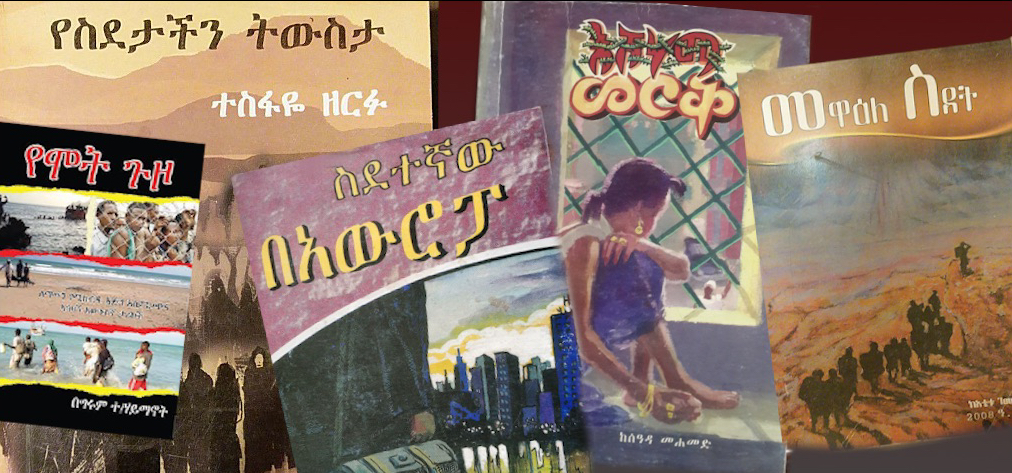
Talk about migration is widespread in present-day media. Paradoxically, the abundance of reports on migration does not seem to help bring the experience of migrants closer. On the contrary, the overuse of the term ‘migrant’ makes us forget that this word is much too broad to explain anything substantial about the people it denotes. Nikolay…
-
Shifting the narrative on African migration

Negative public opinion in Europe is a major obstacle to holistic and sustainable policies relating to African migration. Based on his observations of migration debates in Sweden and Denmark, Jesper Bjarnesen argues for a shift in wording and perspective away from politicised opinions about immigration, or misplaced ideas of humanitarian responsibilities, towards a more constructive…
-
From Campus to Camp and Back

In this field note, Marcia C. Schenck reflects on her ongoing involvement with Princeton University’s Global History Lab courses in Kakuma refugee camp. Through courses in global history, she argues, camp residents are not only given access to academic knowledge but also empowered to produce compelling historic narratives by using their location advantage; migration experience;…
-
Africa at the gates: Europe’s lose-lose migration management plan

Since the summer of 2015, the question of how to stem the flows from Africa and the Middle East is at the centre of increasingly existential debates about the very future of Europe. Loren B Landau and Iriann Freemantle contemplate the underlying logics and effects of EU migration management.
-
Wayside promise: Ghanaian roads as routes to brighter futures

Ethnographic fieldwork requires not only long-term immersion, but also perceptiveness to the minutiae of the mundane. Walking, running, and driving along the roads of a Ghanaian city inspired me to rethink the meaning of migration. Jørgen Carling reflects on his recent fieldwork in Ghana.
-
African migration: Who’s thinking of going where?

It is well established that young people constitute the majority of those who risk their lives on migratory routes from Sub-Saharan Africa towards Europe. But there are important differences by country that may inform more targeted policy responses. Afrobarometer’s Josephine Appiah-Nyamekye and Edem Selormey present the preliminary findings of the current round of nationality representative…
-
The camp beyond the city: Kakuma and the development of a camp ecology

Kakuma refugee camp in Northern Kenya is emblematic for the debate about the ambiguous phenomenon of the protracted refugee camp. The camp has taken on an urban-like form; a dense, non-agricultural, informal settlement, that is characterized by the meeting of both curtailing and enabling forces, and human agency – by Bram J. Jansen