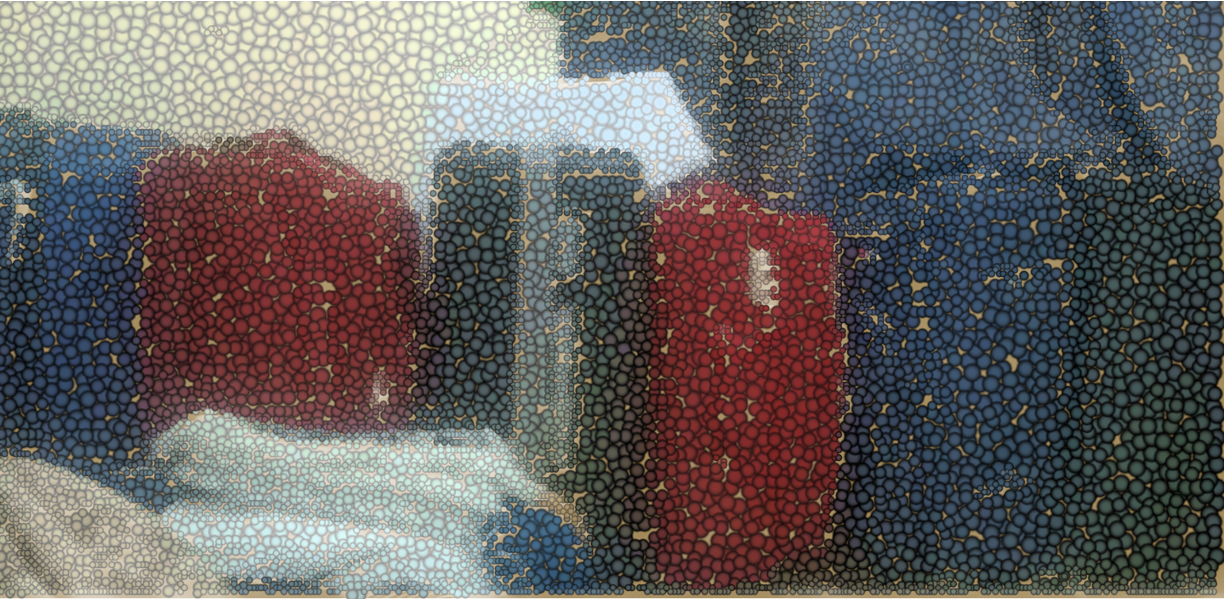
Tales of Courage and Exploitation
Cover image adapted from photo by the author
by Saleh Seid Adem
Kafala is a sponsorship system that is widely practiced in the Gulf Cooperation Council (GCC) countries. It is a system that governs the employment of migrant workers, particularly in sectors such as construction, domestic work, and hospitality. Under the kafala system, migrant workers are required to have a sponsor who is usually their employer, and who holds significant control over their visa and legal status in the country. This system has been criticised for creating an imbalance of power between employers and workers, leading to potential exploitation and abuse. Under the kafala system, domestic workers are tied to their employers (kafils) through a sponsorship arrangement, often resulting in vulnerable and oppressive conditions. Some domestic workers opt for escaping the system, often under difficult circumstances. They become “kafala benders”.
In this blog post, I delve into the material objects left behind by kafala benders with an explicit focus on the case of female domestic workers. It will explore how these objects, as physical “ruins”, impact the decisions and strategies of migrants who also consider becoming kafala benders. These ruins serve as both reminders of the hardships endured and symbols of resilience and courage. Inspired by the AMMODI panel at the 2023 ECAS conference in Cologne, I discuss the concept of ruination and its significance for migration studies in understanding the complex dynamics of migrant experiences. By examining the material remnants left behind by kafala benders, we can gain insights into the lived realities and challenges faced by those who navigate the kafala system. Furthermore, understanding the concept of ruination allows us to analyse how these physical remains shape migrants’ perceptions and aspirations, influencing their choices and motivations as they weigh the risks and benefits of becoming kafala benders themselves.
The Complex Dynamics of Kafala Bending
When newly employed domestic workers receive a room in their employer’s house, they often find old items left behind by previous kafala benders who had lived in the room. The material ruins of the previous kafala bender—such as her passport, national identification card, phone, luggage, clothes, and the abandoned maid’s room itself (Khadama)—shape the imaginaries of new workers, influencing whether they feel encouraged or discouraged in
their new environment.
In the context of kafala bending, these remnants can be seen as material and symbolic ruins, not only marking the passage of previous domestic workers but also serving as tangible reminders of the precarious and often transient nature of their labor
In the literature, “ruination” refers to the process through which remnants of the past, both material and emotional, persist and exert influence on the present, often symbolizing unresolved tensions, degradation, or transformation. In the context of kafala bending, these remnants can be seen as material and symbolic ruins, not only marking the passage of previous domestic workers but also serving as tangible reminders of the precarious and often transient nature of their labor. Kafala bending, therefore, can be understood as a process of ruination, leaving behind physical remains and emotional scars that weigh heavily on the bodies and minds of domestic workers.
The Unpaid Wages
In almost every instance, kafala benders leave behind their unpaid or pending wages with their employers, ranging from one to six months. Employers utilize the tactic of withholding the monthly salaries of domestic workers as a loyalty hostage, coercing them to continue working under oppressive conditions. This practice makes kafala bending costly, as the migrant worker leaves behind her hard-earned wages. Despite this loss, many domestic workers still choose to circumvent the kafala system, viewing their decision to flee and leave their wages as a testament to their courage and determination for a better future. Sofiya, a recent Kafala bender, stated that she felt she had been provided sustenance for the past three months in exchange for her monthly salary. She was paid one month’s salary every three months, and her madam told her she was ‘saving’ it for her and would give it to her by the end of the contract. She then gave up and fled. She stated, “I did not leave my family in Ethiopia for good food and garments alone. Here, I have a mission. It is to work diligently, earn as much money as possible, save as much money as possible, and return home”. The injustices of unpaid wages do not stop but rather incite migrants to bend the kafala. They are abandoning their kafil/employer because of lack of control over the salaries.
Despite this loss, many domestic workers still choose to circumvent the kafala system, viewing their decision to flee and leave their wages as a testament to their courage and determination for a better future
Employers withhold domestic workers’ wages as a form of coerced “security deposit” to guarantee their commitment to the work contract. Confiscating passports or travel documents is illegal but widely practised. This control tool makes it difficult for domestic workers to leave abusive employers or seek legal recourse, which makes them vulnerable. However, many domestic workers defy the assumptions underlying the security deposit and take significant risks to escape their kafil, well aware of the consequences involved.
Kehdija connects her own experience of kafala bending to the unpaid wages left behind by a former colleague. She explained that another Ethiopian domestic worker who had worked in the same household escaped the year before, leaving behind three months of unpaid wages with their employer. Kehdija recounted how astonished she was by her colleague’s decision, particularly since her employer frequently emphasized how reckless and wasteful it had been. These reminders weighed heavily on Kehdija, making it difficult for her to justify the financial implications of her own potential escape. The unpaid wages left behind by her coworker remained a constant reminder as she wrestled with the idea. She said, “On the other hand, I figured there must be something so enticing out there for my coworker to give up three months of hard work and flee, even without a passport. It unsettles me that circumventing must be profitable alongside freedom.”
The Abandoned Maid’s Room and the Bags and Clothes
In households that employ domestic workers, a separate room known as the “Khedama room” or “maids’ room” is a standard feature. This room, often abandoned by Kafala benders, represents the lifestyle that has been left behind. It serves as a physical manifestation of the power dynamics and exploitation inherent to the Kafala system. While the room can entice potential benders who desire control over their labour and lifestyles, it can also deter them by reminding them of the harsh realities and risks associated with abandoning their employer.

When fleeing their kafil, domestic workers often leave behind their bags and clothes, as carrying them would attract attention and hinder their escape. Brokers from the outside will not tolerate or allow the domestic worker to come out with her bag of clothes. It is too risky, as it could easily attract the attention of her employers, and from the police once they are out. Thus, the abandoned maid’s room also contains personal belongings left behind by the previous domestic worker. Occasionally, the migrant domestic worker will use trash bags to smuggle in emotionally or financially valuable items. For example, on the day of their engagement, Seada’s husband gave her a dress as a gift, which she placed in a garbage bag to smuggle with her when she bended/left. She said, “It was a very special dress for me, and I didn’t want to leave it behind or damage it during my escape. Using the garbage bag was a quick and easy solution.” These material remnants not only symbolise the sacrifices made but also represent the potential for a new life. Semira said in her kafala bending story,
‘… when I first moved into my room inside my kafil house, I saw three bags in the room, and my madam told me that they belonged to two former domestic workers who decided to escape from her. The bags were filled with clothes. I think my madam intentionally decided to leave the bags in the room to remind me of the sacrifice of escaping and to deter me from doing the same. However, the bags ended up being a source of motivation for my kafala bending decision.’
Broken SIM Cards

Employers often restrict domestic workers’ access to phones to control their communication and prevent them from seeking help. Despite this, some domestic workers find ways to use phones for communication with friends or relatives, and for planning their escape. Broken SIM cards left behind serve as remnants of their attempts to maintain contact with the outside world while facing restrictions. In the eyes of the new domestic worker, these damaged SIM cards symbolise the resilience and determination of domestic workers to overcome barriers and seek freedom.
Conclusion
The material ruins left behind by kafala benders play a significant role in shaping the imaginaries and decisions of domestic workers considering escape. They represent the sacrifices, risks, and potential rewards associated with escaping the Kafala system. These ruins reflect the resilience, courage, and agency of domestic workers who strive for a better future. By understanding the symbolic meaning of these material remnants, we can gain insight into the dynamics of the kafala system and work towards a more just and equitable treatment of migrant domestic workers.
About the author
Saleh Seid Adem is a doctoral researcher and teaching assistant at the University of Cologne. His PhD research examines Ethiopian migrant workers in the UAE under the Kafala system. He also teaches graduate students at the University of Cologne’s Department of Social and Cultural Anthropology in a course on contemporary migration to and from Africa.
Leave a Reply